Bioinformatics course in Nizhny Novgorod
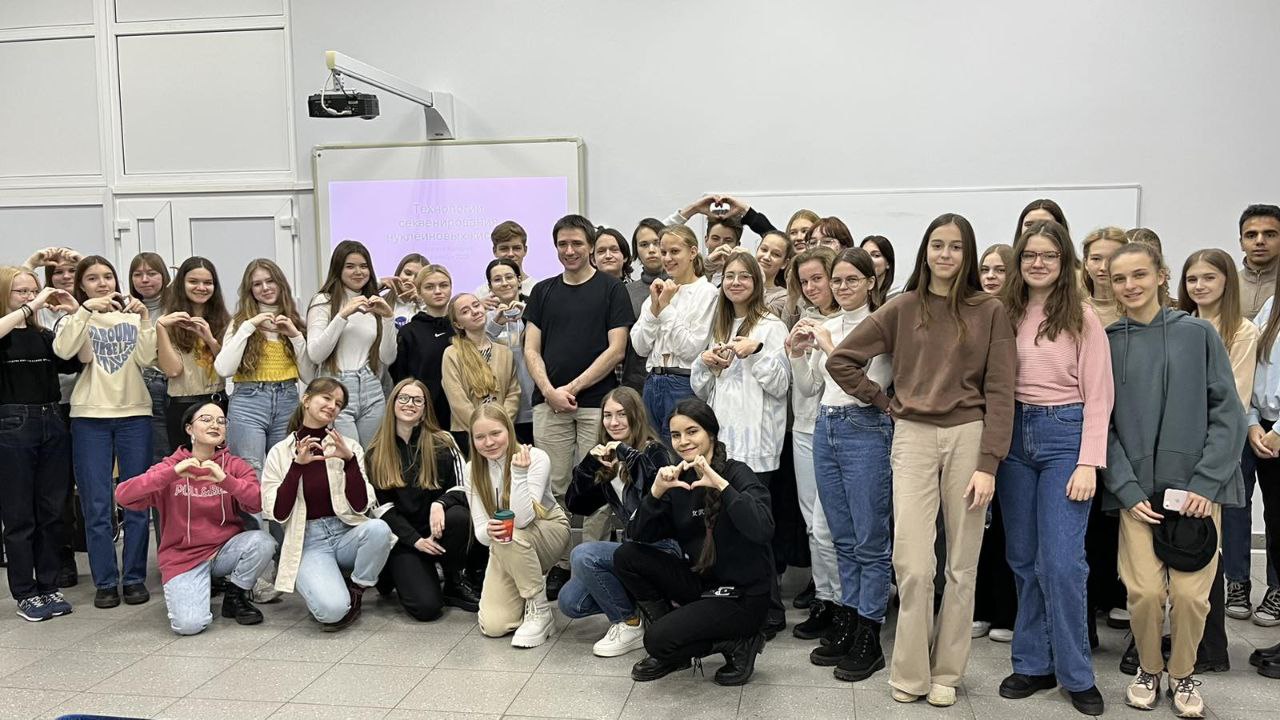
On November 4-6, Matvey Kolesnik, a member of our laboratory, conducted a bioinformatics intensive for schoolchildren in Nizhny Novgorod. The topic of the intensive was “Study of antirestriction systems of bacteriophages”.
At the intensives, the guys analyzed the genomes of bacteriophages and looked for genes in them that are responsible for bypassing bacterial defense systems.
Recently, a team of scientists led by David Bikard discovered a new PARIS defense system that allows bacteria to overcome infection by phages. This system is known to be activated by special phage proteins that mimic DNA molecules and inhibit restriction-modification systems.
Recently, a team of scientists led by David Bikard discovered a new PARIS defense system that allows bacteria to overcome infection by phages. This system is known to be activated by special phage proteins that mimic DNA molecules and inhibit restriction-modification systems.
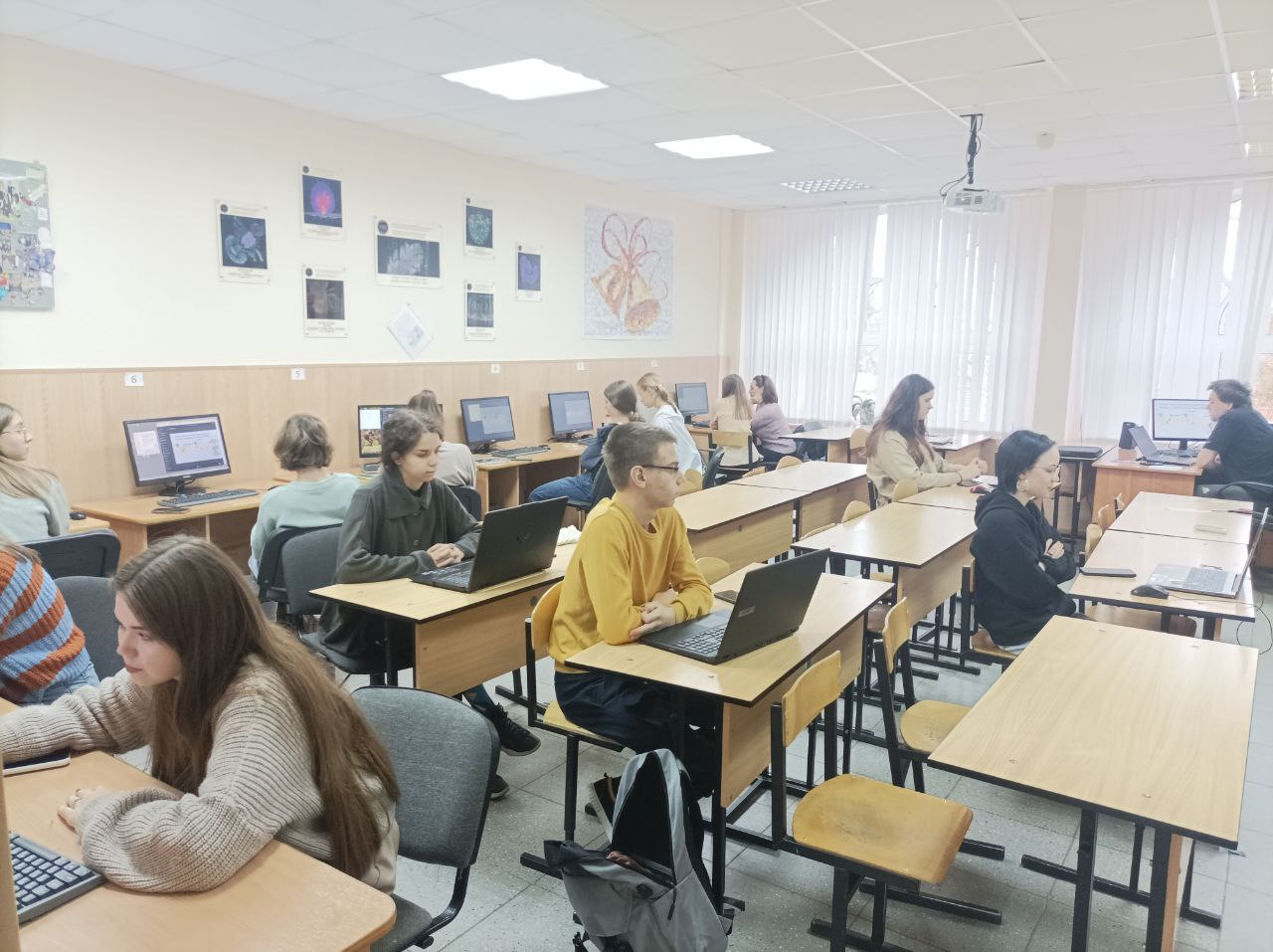
There is a T5 phage that normally cannot infect E. coli carrying PARIS. In our lab, we obtained mutant T5 phages that learned to bypass the PARIS system and infect cells. The main scientific goal of this workshop was to understand what made this happen: what changed in the genome of these phages? What genes had mutations in them?
Together with the course participants, we identified several mutations that lead to a reading frame failure in one of the bacteriophage genes. We looked at what kind of protein this gene encodes and tried to predict its structure with the AlphaFold2 program. It turned out that this is a small protein with a large number of negatively charged amino acids, and in the predicted 3D structure can even be seen grooves that mimic the double helix of DNA!
06.11.2022
Together with the course participants, we identified several mutations that lead to a reading frame failure in one of the bacteriophage genes. We looked at what kind of protein this gene encodes and tried to predict its structure with the AlphaFold2 program. It turned out that this is a small protein with a large number of negatively charged amino acids, and in the predicted 3D structure can even be seen grooves that mimic the double helix of DNA!
06.11.2022